Emerging technologies have the ability to foster creativity within students. There is a wide variety of educational technologies which are capable of fostering creativity however, there are some that do not (Henriksen, Mishra & Fisser, 2016). I believe technology should be applied alongside teacher creativity, because without teacher creativity, students would not be able to explore and experiment with technology nor would creativity be fostered or developed (Loveless, Burton & Turvey, 2006; (Henriksen, Mishra & Fisser, 2016). Creativity is essential in developing divergent and original ideas, as well as creative and critical thought processes. Therefore, it is critical for teachers to gain a profound understanding of creativity first, in order for students to use factual, conceptual and procedural knowledge together with creative cognitive processes (Bower, 2017; Anderson & Krathwohl, 2001).
OSMO is an emerging technology consisting of games in math’s, puzzles, coding, business, spelling and drawing. My group experimented with the spelling game and found many pros and cons. OSMO is played by throwing tangible letter pieces under the projector which then appear on the screen as correct or incorrect. OSMO can be used in all curriculum areas you can create your own games specifically for what you are teaching (i.e. science – water cycle). You can also manipulate the difficulty of the games depending on student’s abilities. Thus, it is excellent to engage older students in summary/reflective lessons, and can also help younger students to develop spelling and reading skills at a faster pace.
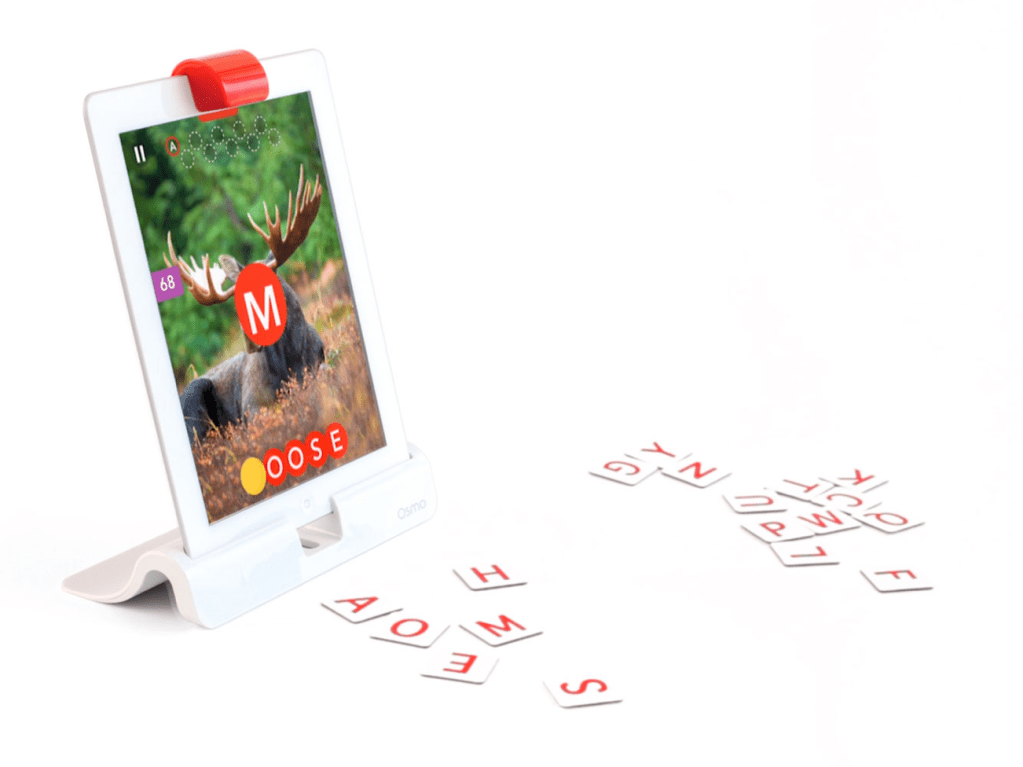
The main issue we found was that by throwing the letters under the projector, children may begin throwing numerous random letters in order to win, easily creating an uncontrollable environment. Additionally, there may not be enough of a challenge for older students as it only allows students to remember what they have been taught in a rote-learning situation. Furthermore, it only accesses students remembering cognitive process of both factual and conceptual knowledge correlating to the mini-c level of creativity (Anderson&Krathwohl, 2001; Beghetto & Kaufman, 2013).
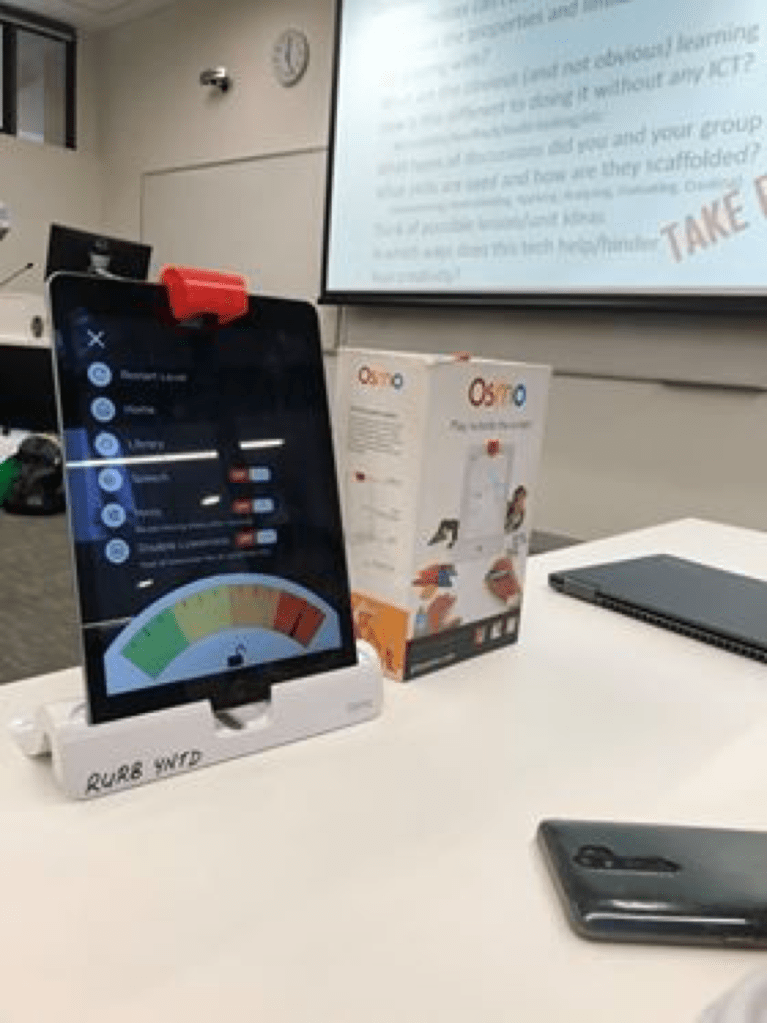
Overall, I believe OSMO is an engaging and unique way for students to learn. It can be used in all curriculum areas however, mainly summary/revision activities and spelling lesson activities. Teacher creativity is essential in creating challenging games however, OSMO will still only access lower cognitive processes. Therefore, I do not believe that OSMO truely fosters creativity.
 Elise's Blog
Hey Elise, I agree that this technology provides a creative teaching strategy, and how teacher creativity can positively or negatively affect student creativity. I understand personally how you can usually gauge pretty well how well a resource can foster creativity but would have liked to have known your reasoning behind this. I also would have loved to know what you thought about the technology and how it may (or may not) have fostered students’ creativity. I also appreciate how streamline and clean your blog looks and how you used your home page to introduce your blog.
LikeLiked by 1 person
Hi Elise,
I found your comments on the inclusion of creativity in the classroom in all aspects extremely informative. Interesting that it can be used within assessment, as well as, factual, conceptual and procedural knowledge alike. Have you considered the impacts of including creativity in these aspects? I have found through experience in the classroom that allowing a full range of creativity within some areas can lead to longer lessons. Therefore, hindering the outcomes of the day as you may have set requirements to reach.
In terms of OSMO, I agree that there are limitations to the activity that children may become ‘lazy’ and put as many numbers through in a trial and error system, in order to win the games. However, a great way to engage students or as a reward for finishing a task early! Additionally, the implementation of gamification in the classroom is a great way to involve a range of students abilities and interests through a supportive and competitive spirit.
Overall, I found your points very interesting. This is a great overview of how creativity can be used through technology in the classroom.
LikeLike
Hi Ash,
Thank you for your response. I have been pondering ways in which to foster creativity for students, however have found this challenging. I feel the best way for this to occur is through what Brooke has commented – enable students to create these games to challenge a friend. This allows students to create different types of questions but still only allows them to apply their knowledge. I think fostering creativity would be challenging with OSMO and would require more creative pedagogical strategies to do so. But overall, it is a good basic introductory or summarising game.
LikeLike
Great blog, I really enjoyed reading it! I strongly agree that OSMO has many pros and cons when integrating it into the classroom. I believe OSMO is a program that would best be used as an introduction to a lesson or could be used during literacy groups for younger students. When using this program, I also discovered the issue you mentioned with throwing letters under the projector. Students can easily guess random letters and win. OSMO must be definitely used under close teacher supervision. I agree, using OSMO does not truly foster creativity.
LikeLiked by 1 person
Hey Elise, I enjoyed how your blog post, it was easy to read and included examples that made your argument clear.
I like your point on OSMO creating an uncontrollable environment, my group thought the same thing. What kind of classroom management strategies would you suggest when implementing OSMO?
You mentioned the importance of teacher creativity however this is difficult due to the limitations on OSMO. Did you have any specific ways you could foster creativity through OSMO?
You stated revision or summary activities would be the way you would implement OSMO in your classroom. I could also see OSMO being integrated at the beginning of the learning sequence to provide a diagnostic assessment of vocabulary to a specific topic. Additionally, I thought perhaps how you stated games can be created can enable students to create these games themselves and test a friend. However, again this is still the cognitive process of “applying” knowledge; a lower cognitive process as you mentioned is a limitation of OSMO.
Your blog incorporated relevant ideas, however I think you forgot to include your reference list!
LikeLike
Hey Brooke, thank you for your response! I definitely agree with everything you have said. I have found that fostering creativity through OSMO is extremely challenging and I agree with you in allowing students to create their own games would do this. However, as you said, they are still using lower-order thinking. I think it would be interesting to see how OSMO could be used to encourage higher-order thought processes, integrating creative and critical thinking!!
For management strategies, you would definitely have to consider smaller groups, however this could be limited to the number of mobile devices and OSMO resources in the classroom. Furthermore, the use of explicit and direct instruction would be beneficial for the smooth running of the activity. Then, in this way, the instructions would be clear and concise, ensuring students know what they are doing.
LikeLike