Virtual Reality (VR) has been around for decades, but has only recently emerged into classrooms. Southgate (2018) defines VR as an immersive 3D computer-generated world which can be a highly imaginative or realistic simulation. VR has different environments – one being on a desktop and the other through a wearable headset such as Google Cardboard or Oculus – which block out reality fostering a more immersive VR. These environments offer users varying levels of interaction from navigating a world to designing their own worlds and elements within their world (Southgate, 2018).
Depending on the environment, users can experience VR in either first or third person perspectives or both (Southgate, 2018; Dede, 2009). The situated learning environment of VR, immerses students in creative proficiencies as they become designers of their worlds (Dede, 2009). In addition, VR is excellent to use within all curriculum areas including but not limited to; Social Sciences, Languages, and English.
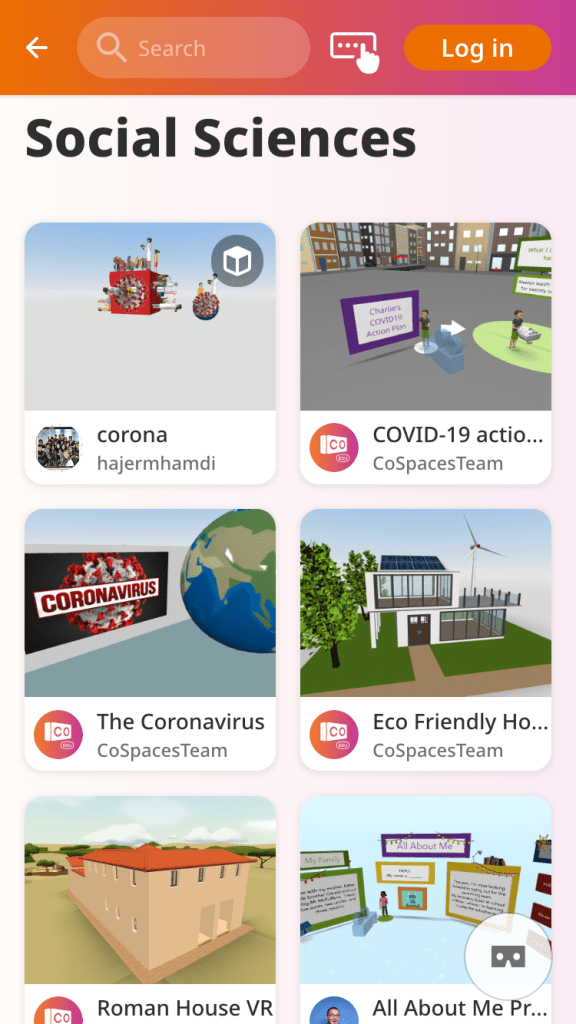
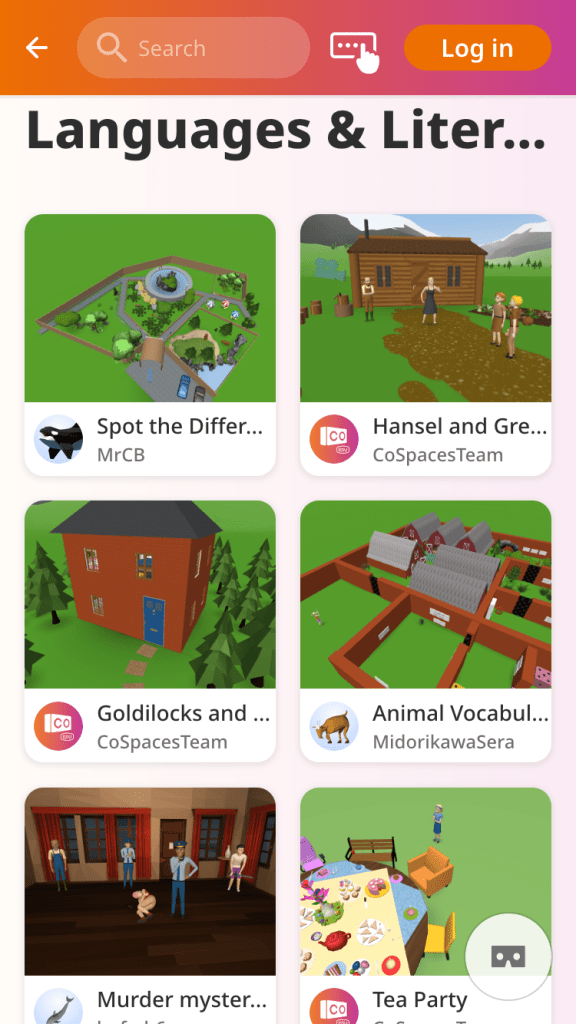
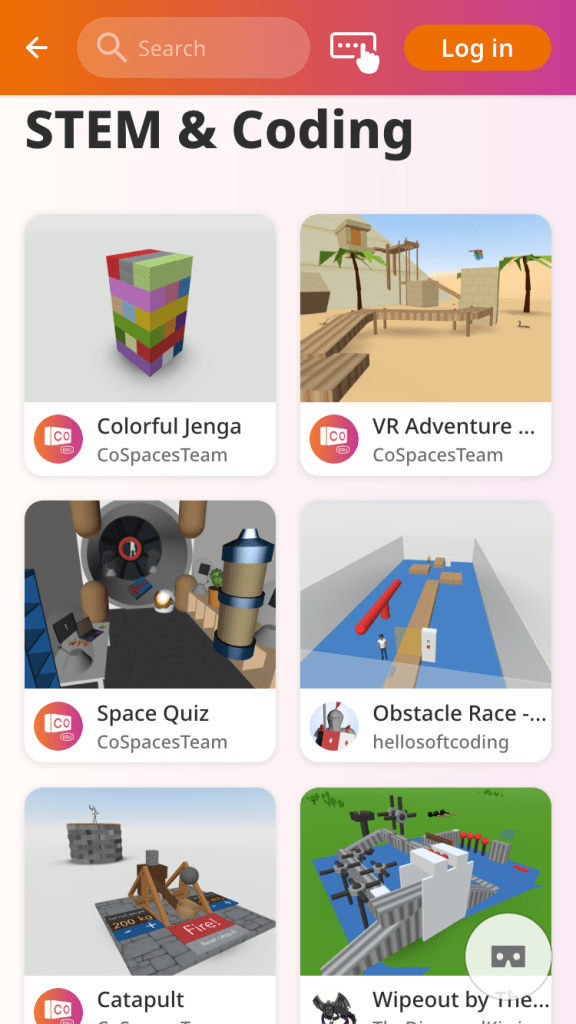
CoSpaces Edu is an online platform where its users create 3D environments either on a desktop and/or via a wearable headset. The boundaries of student’s worlds are endless, as they construct their own worlds with custom built objects made of building blocks, character objects and animations and can even upload an alternative audio recording for the narration. A great example of CoSpaces in English is to introduce storytelling in VR in which students recreate a well-known narrative (e.g. Hansel and Gretel) using the aforementioned elements in 3D. Furthermore, CoSpaces incorporates coding using the platform’s CoBlocks, and can be shared with others via a QR code.
Unfortunately, low teacher technological knowledge limits student creativity through improper use. Therefore, teacher training is critical prior to its implementation. Moreover, Southgate (2018) states the greatest risk to student health being cyber sickness. Thus, students who suffer from motion sickness will be not allowed to use VR headsets as there is no ‘reality check’. To overcome this issue, students can participate in VR via desktops only, ensuring all students are participating in such a rich and authentic learning experience.
Nevertheless, the teaching of educational content has radically transformed as students manipulate and interact with the content, bringing it to life; further increasing engagement and participation levels as well as engaging students in creativity (Southgate, 2018). Because of this, VR activities promote active learning for students through authentic and meaningful tasks fostering creativity and critical thinking skills (Dede, 2009; Southgate, 2018).
References
Southgate, E. (2018). Immersive virtual reality, children and school education: A literature review for teachers.DICE ResearchReport Series Number 6. http://dice.newcastle.edu.au/DRS_6_2018.pdf
Dede, C. (2009). Immersive Interfaces for Engagement and Learning.Science, 323(5910), 66-69. 10.1126/science.1167311
Southgate E., Smith, S. P., Cividino, C., Saxby, S., Kilham, J., Eather G., Scevak, J., Summerville, D., Buchananan, R., & Bergin, C. (2018). Embedding Immersive Virtual Reality in Classrooms, Ethical Organisation and Educational Lessons in briding Research and Practice. Elsevier, 19(2019), 19-29. 10.1016/j.ijcci.2018.10.002


Hi Elise great post. I think you have presented the topic of VR well in your blog, covering key affordances and issues of using VR in the classroom. I particularly liked how you have presented using desktop VR instead of headset VR as an effective solution to the issue of motion sickness. I also think you have shared a creative example of recreating Hansel and Gretel using CoSpaces VR.
I agree that there are many other areas VR can be implemented within. Although when implementing VR into specific topic areas within the curriculum it should be recognized that VR is not always an effective tool for learning. A study by Makransky (2019) observed that doing VR simulated laboratory work significantly reduced learning.
Makransky, G., Terkildsen, T. S., & Mayer, R. E. (2019). Adding immersive virtual reality to a science lab simulation causes more presence but less learning. Learning and Instruction, 60, 225-236.
LikeLike
Hi Mark,
Thank you for your comment and also, thank you for the article that you referenced! After taking a look at the article I found it very interesting and I agree with what you’re saying in regards to the reduced learning levels. I think that if teachers were able to create a learning experience in which students are the designers than this would increase creative and critical thinking capabilities. In doing so, I think that this increases engagement with the material that need to be learnt. Additionally, I do think it is important to use some form of assessment to determine the effectiveness of the technology and the levels of knowledge and understanding that have been attained from VR units of work.
LikeLike