Gaming and education
Games are a method of creative release depending on the way they are used. I say this because there are many negative opinions about gaming which have impacted its use in education (Gee, 2005). However, by integrating digital and non-digital teaching strategies, we remove the dichotomy between the two and create an authentic and meaningful learning experience catering to all students needs (Toomey, 2017; Salen, 2010). Moreover, many studies have shown a great number of benefits when implementing gaming into the classroom and the positive effect they have on transforming children’s learning experiences.
The main setback of incorporating gaming in education, is teacher’s inability to differentiate and to appropriately use gamification and games-based learning in their classrooms; resulting in negative learning experiences. Thus, raising the question: should students play ‘pre-packaged’ games or should they create their own games.
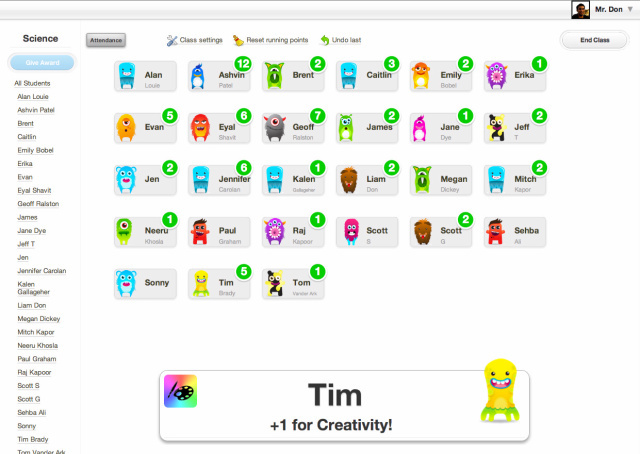
Firstly, gamification is the integration of game-like elements into conventional learning activities, increasing student engagement and motivation through pre-packaged experiences (Bower, 2020). For example, Class Dojo allows teachers to use game-like elements to award students on behaviour and academic achievements. Young children are eager to ‘win’ and will do anything to be rewarded. Sadly, resulting in a lack of engagement with educational content and literacies, quality of work and a shift towards extrinsic motivation (Gee, 2005; Toomey, 2017).
Benefits of gamification greatly depend on the contextual environment and the user using it (Hamari, et al., 2014). Therefore, overcoming this issue requires teachers to re-establish intrinsic motivation and provide opportunities for reflection and critical thinking (Toomey, 2017). This way, students engage with the targeted curriculum content and literacies (Toomey, 2017; Moore-Russo, 2018).
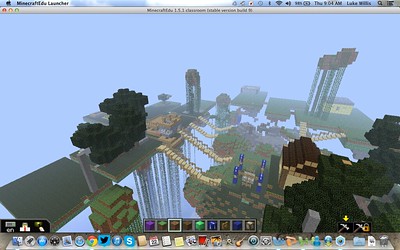
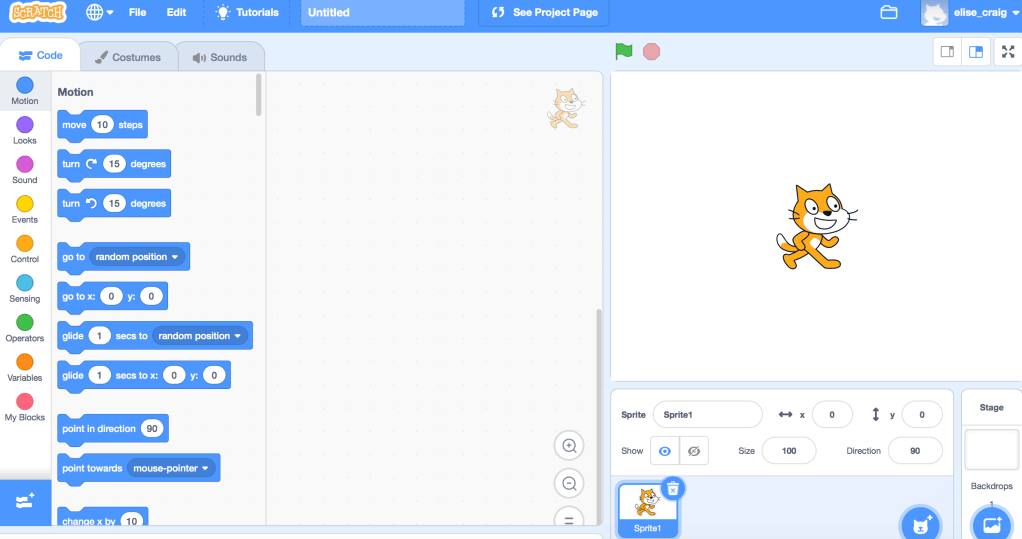
Secondly, games-based learning is the designing of games so that game characteristics and principles inhere within the learning activity themselves (Bower, 2020). Engaging with game-design is far more challenging and creative than gamification. Both Scratch and Minecraft EDU are excellent examples of this as they position students as designers whilst refining gaming proficiencies which can be used with non-digital media (Toomey, 2017). Setting tasks which suit student abilities and interests engages them in higher-order thinking capabilities (Beavis et al., 2015; Marcon & Faulkner, 2016).
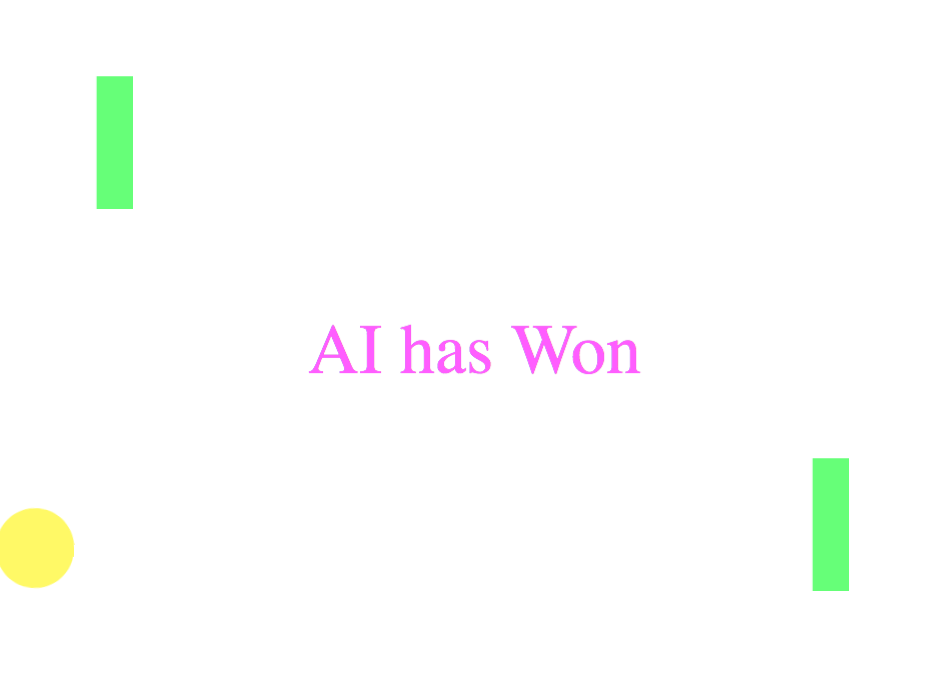
AI won 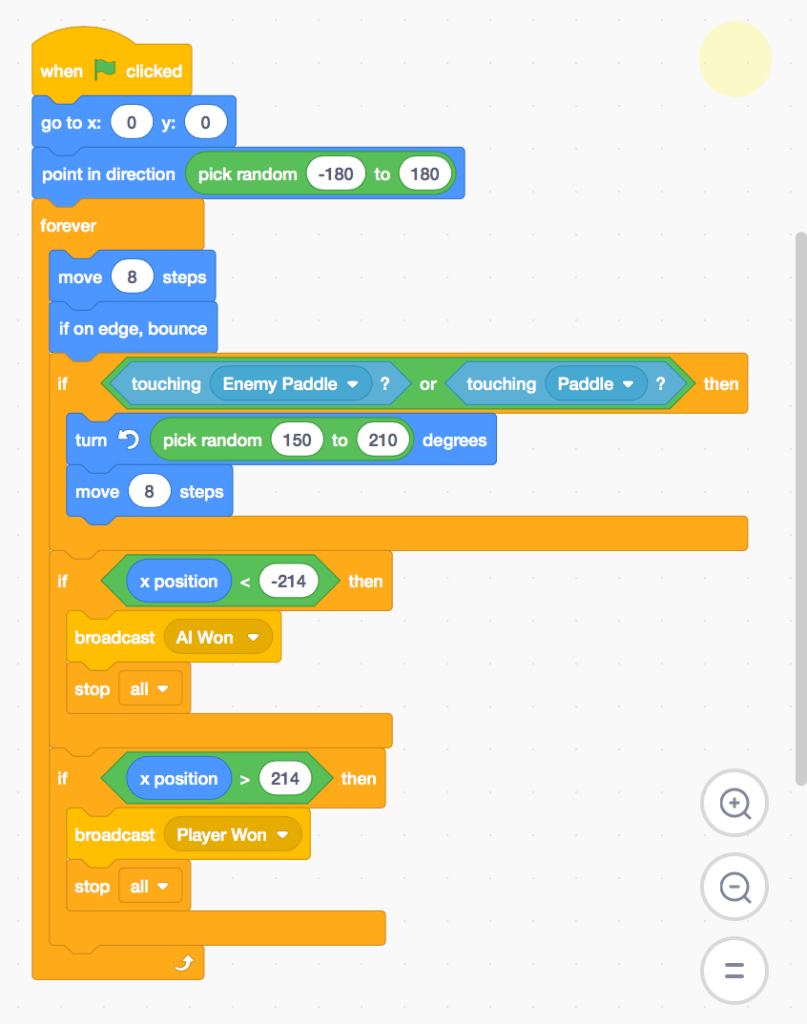
coding for the Ball 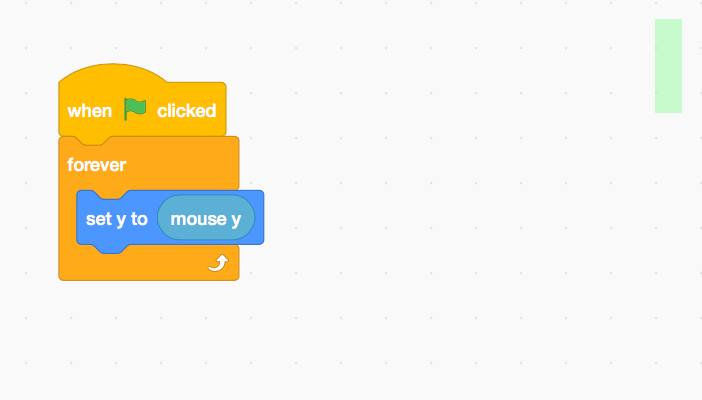
coding for the Player Paddle 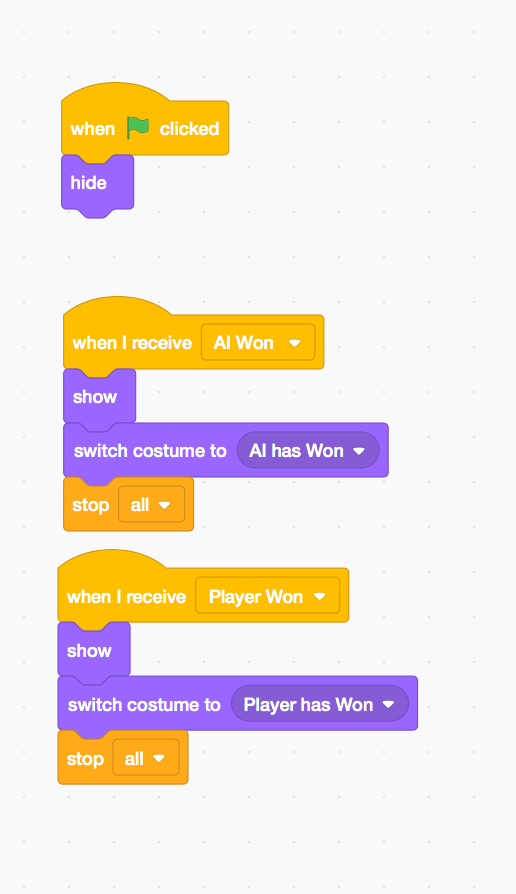
coding for the winners text 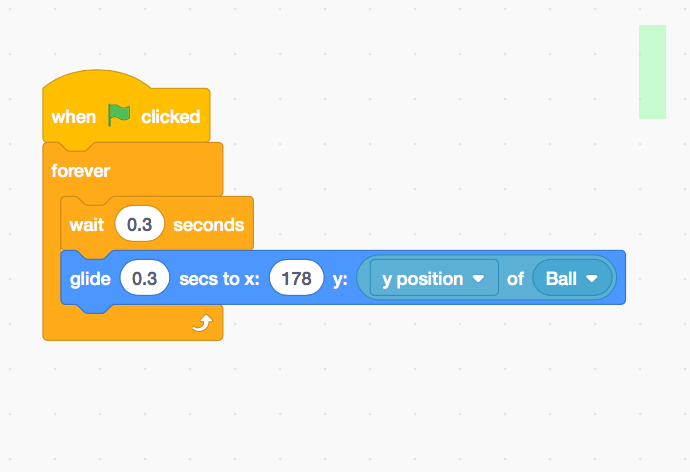
coding for the Enemy Paddle 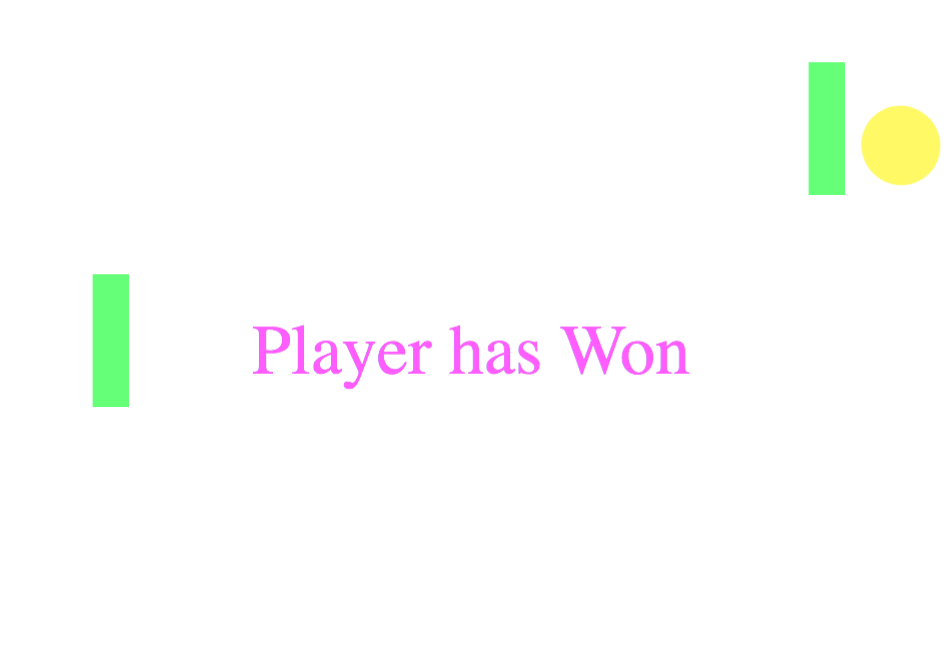
Player won
Here you can play the game I created following a step-by-step tutorial, using Scratch:
https://scratch.mit.edu/projects/396753151
Due to my limited knowledge of this technology and coding, I found it challenging to be creative; and when I did try to be creative, I encountered many problems. However, the process of design is way more important than the final product (Prensky, 2008).
Involving students in gaming promotes positive engagement with a wide range of educational literacies and 21stCentury capabilities (Marquis, 2012; Toomey, 2017). Developing activities suited to student abilities and interests allows meaningful interactions to occur and will foster greater creativity and critical thinking capabilities, rather than a task which scaffolds the making of a final product.
Beavis, C., Walsh, C., Bradford, C., O’Mara, J., Apperley, T., & Gutierrez, A. (2015). ‘Turning Around’ to the Affordances of Digital Games: English Curriculum and Students’ Lifeworlds. English in Australia, 50(2), 30-39.
Gee, J. P. (2005). Good video games and good learning. Retrieved from: http://dmlcentral.net/wp-content/uploads/files/GoodVideoGamesLearning.pdf
Marcon, N., & Faulkner, J. (2016). Exploring Minecraft as a pedagogy to motivate girls’ literacy practices in the secondary English classroom. English in Australia, 51(1), 63-69.
Marquis, J. (2012). Game Design is the Key to an Innovative 21st Century Education. https://www.onlineuniversities.com/blog/2012/02/game-design-is-the-key-to-an-innovative-21st-century-education/
Prensky, M. (2008). Students as designers and creators of educational computer games. British Journal of Educational Technology, 39(6), pp. 1004-1019. Retrieved from: https://onlinelibrary.wiley.com/doi/epdf/10.1111/j.1467-8535.2008.00823_2.x
Salen, K. (2010, July 29). Katie Salen on Learning with Games. https://www.youtube.com/watch?v=xV_VlhV99EA&feature=youtu.be
Toomey, M. (2017). Engaging the enemy: Computer games in the English classroom. Literacy Learning: The Middle Years. 25(3), 38-49.
 Elise's Blog
Hi Elise! I can tell you researched the topic well and I admire you having a go at using the Scratch technology! I wonder how you could use Minecraft and scratch as a lesson?
LikeLike
Thank you for your comment! Obviously Scratch has a whole lot of technologies that it can connect to so I think if there was a way to connect the two together then it could be a very effective lesson if thought out well. However, I think that because they are two different technologies it may not be useful to integrate them together as it could be overwhelming to be using different thinking skills.
LikeLike
Hi Elise!
I definitely agree that a lack of expertise on this technology leads to a decrease in creativity. I found myself having to follow several different youtube tutorials to get something to work. It started to become like ROTE learning rather than a more creative way of learning But there are so many possibilities with Scratch and as long you can figure out how to make the most use of it I think it could be a great tool to use in the classroom. It would just need several lessons on how to actually use it. Do you think you would be able to incorporate Scratch into different KLAs?
– Jerick
LikeLike
Hi Jerick!
There are quite a few examples of Scratch being used across most curriculum areas but i also think this could be challenging if students and teachers are not familiar with the technology and the coding that is used. There was an example of a storybook that someone had created, but again, this would be quite challenging for younger primary students and most teachers to understand. I think, if there is adequate training for teachers where they see its full potential and if there is frequent use within classrooms throughout the entirety of school, then it could be quite an effective way to challenge traditional education pedagogies and will involve high engagement and creative thinking.
LikeLike